

High-Quality Mesoporous Silica: Breakthroughs in Synthesis and Industrial Potential
2026-06-04
Mesoporous silica has long captivated researchers with its ordered pore networks and vast surface area, yet achieving both high quality and scalable production remained a persistent challenge. Recent breakthroughs in synthesis are rewriting the rules—enabling finer control over pore architecture and surface chemistry while slashing costs. These advances are not just academic; they’re unlocking transformative industrial applications, from precision drug delivery to next‑generation catalysis. At the forefront of commercializing these innovations is Zhonglian, whose expertise in large‑scale manufacturing is turning laboratory promise into real‑world impact. In this post, we’ll explore the key synthesis breakthroughs and the industrial horizons they’re opening up.
Rethinking Porosity: The Next Wave in Silica Design
Silica's traditional identity has long been carved by the simplicity of its pore networks—tunnels and voids carefully templated, then left to perform. But that era of static architecture is fading. We are now learning to treat porosity not as a fixed set of cavities, but as a dynamic, responsive language. This shift demands that we view every pore as a functional unit capable of adapting to its environment, opening or constricting on cue, altering surface chemistry in real time. The result is a material that starts to behave less like inert scaffolding and more like a living interface.
The crux of this evolution lies in how we engineer hierarchy across scales. Instead of uniform mesopores, new design strategies favor interconnected architectures where macropores feed reagents into a labyrinth of smaller, chemically tuned chambers. Molecular gates—often stimuli-responsive polymers or supramolecular assemblies—guard these entries, unlocking only under specific triggers such as pH shifts, light, or enzymatic activity. This orchestration creates silica that can time-release active agents, separate molecules with unprecedented precision, or even signal its own structural state, blending the roles of sensor and actuator into one monolithic framework.
What truly propels this next wave is a departure from top-down templating toward bottom-up emergence. By exploiting self-assembly kinetics and transient phase separation, researchers can now guide silica precursors into morphologies that rival biological complexity—folded sheets, helical channels, or vein-like networks that mimic leaf venation. These forms are not merely aesthetic; they amplify mass transport and mechanical resilience beyond classical limits. As the field moves deeper into adaptive porosity, we will likely see silica systems that heal their own fractures, reconfigure flow paths on demand, or even harvest energy from concentration gradients—blurring the line between passive matrix and active matter.
From Lab to Factory Floor: Scaling Up Without Sacrificing Quality
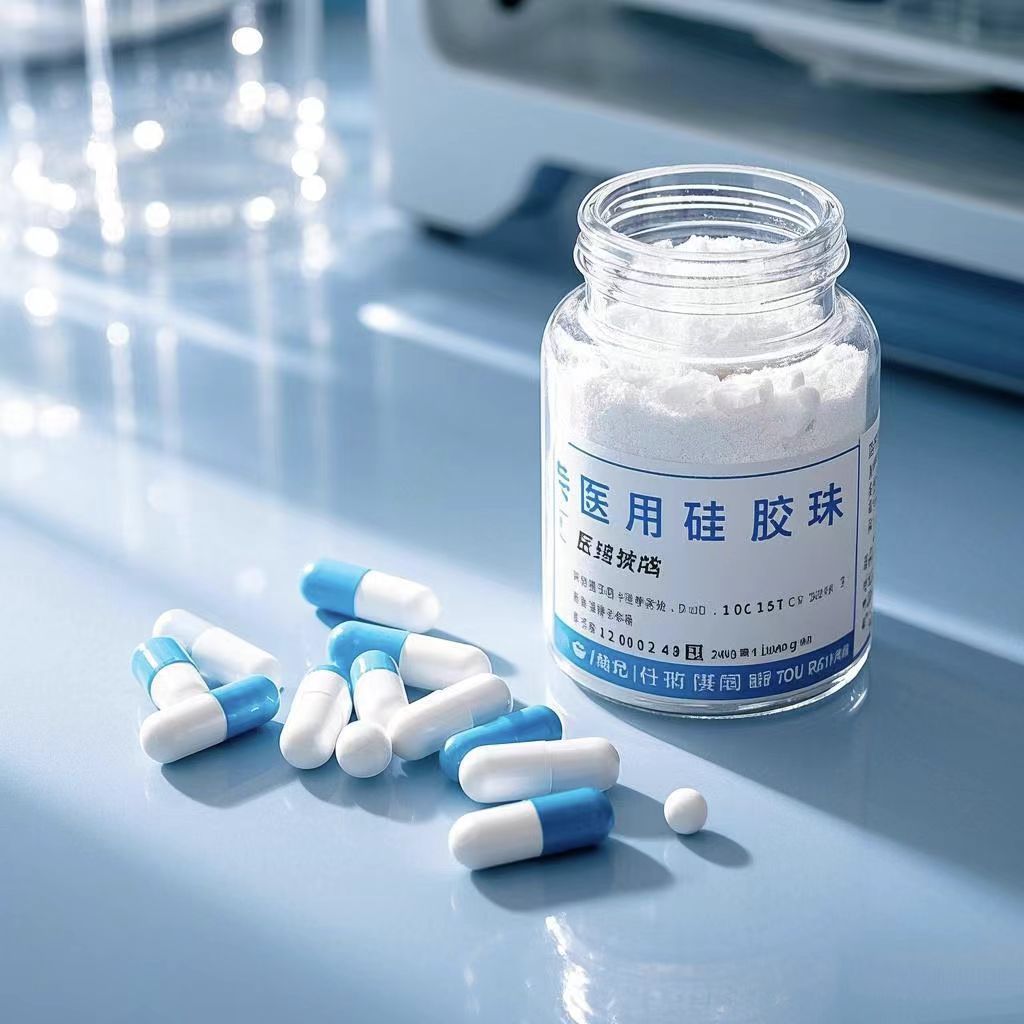
Moving a production process from the controlled environment of a lab to a full-scale factory floor is rarely a simple copy-paste operation. Bench-top successes often rely on conditions that cannot be perfectly replicated at scale—custom glassware, manual interventions, and lenient timelines. The first real hurdle is recognizing which elements of the lab protocol are inherently unscalable and redesigning them without altering the product’s critical quality attributes. This might mean swapping a batch reaction for continuous flow, or rethinking purification steps that work fine for grams but create bottlenecks at kilograms.
Process analytical technology becomes the bridge between the two worlds. In the lab, you’d sample and test at leisure; in production, waiting hours for offline results invites disaster. By embedding real-time sensors and automated feedback loops, you capture the same—or better—process understanding without slowing down. A pH probe or a near-infrared spectrometer, tied to a control system, can make instantaneous adjustments that a technician with a clipboard never could. The trick is to validate these in-line measurements early, so they become trusted substitutes rather than parallel workstreams that add complexity.
Ultimately, quality shouldn’t be inspected into a scaled-up product; it should be built into the manufacturing process from day one. That means resisting the temptation to simply “tweak” a failing full-scale batch until it matches the lab sample. Instead, engineering and R&D teams must collaborate on a scalable design space, mapping out the safe operating limits for every parameter. When done right, the factory floor becomes a direct extension of the lab—not a distorted echo of it—and the product meets the same patient or customer expectations, whether it’s the first lot or the fiftieth.
Beyond Catalysis: Surprising New Roles for Mesoporous Silica
Mesoporous silica has long been celebrated as a catalytic workhorse, but its story doesn't end there. The material's uniform pore channels, high surface area, and easily modifiable surfaces have unlocked a range of unexpected applications that push far beyond traditional catalysis. For instance, researchers are now harnessing these nanostructures as smart drug delivery vehicles, where the pores act as protective reservoirs for therapeutic agents, releasing them only under specific biological triggers. This controlled release capability is a game-changer for personalized medicine, minimizing side effects and maximizing treatment efficacy.
Beyond the biomedical sphere, mesoporous silica is making waves in environmental sensing and pollutant capture. Its ordered porosity can be fine-tuned to selectively trap heavy metals or organic contaminants from water, while functionalized surfaces act as sensitive detectors for toxins at minute concentrations. Intriguingly, the same structural features that excel in catalysis are being repurposed to create advanced insulating coatings, optical devices, and even self-healing materials. These emerging roles highlight a fascinating versatility, proving that this seemingly simple porous oxide still holds many surprises.
Green Chemistry Meets Precision: Eco-Friendly Synthesis Routes
The push for sustainable chemical manufacturing has evolved beyond simple substitution of reagents. Today, the focus hinges on designing synthesis pathways that inherently minimize waste at the molecular level. Precision methodologies allow chemists to guide reactions along the most direct, atom-efficient trajectories, cutting out the excess solvents and intermediary steps that once defined industrial scale-ups.
Biocatalytic cascades and flow chemistry exemplify this shift. Engineered enzymes now handle transformations that previously demanded toxic catalysts and extreme conditions, often operating in water at room temperature. Simultaneously, continuous flow reactors unlock tight control over reaction parameters, preventing the formation of side products and slashing purification demands. The result is a leaner, cleaner production cycle.
Beyond the lab, these eco-friendly routes are redefining what’s commercially viable. Companies are finding that precision synthesis not only aligns with environmental mandates but also pares down operational costs. By flipping the script on traditional batch processing, the industry edges closer to a model where high-performance chemistry and ecological responsibility are no longer at odds.
Pore Engineering: Tailoring Structures for Targeted Delivery
The architecture of a pore is never accidental; it's a deliberate design choice that shapes how a material interacts with its environment. By adjusting pore size, geometry, and connectivity, we can essentially instruct a structure on whom to let in, whom to keep out, and when to release its payload. This level of control transforms a passive scaffold into an active participant in delivery, whether that means shielding a delicate molecule from degradation or ensuring it docks precisely at the intended site.
Think of the pore not as an empty void, but as a functional gateway. Its dimensions dictate the transport kinetics: narrow channels foster capillary forces perfect for wicking, while larger cavities accommodate macromolecules or even entire cells. Surface chemistry added to these walls—a charge gradient here, a hydrophobic patch there—further refines selectivity, enabling the carrier to respond to subtle cues like pH shifts or enzymatic activity. It's where materials science meets biological orchestration.
Recent strides in templating and self-assembly have made it possible to carve these pathways with near-atomic precision. Hierarchical porosities—layers of macro-, meso-, and micropores—mimic natural transport systems like the vascular networks in tissues, ensuring that cargo not only loads efficiently but also releases in a sustained, predictable manner. The result is a customized itinerary for every payload, from small-molecule drugs to gene-editing machinery, turning the humble pore into a linchpin of modern therapeutic design.
The Future Unfolds: Mesoporous Silica in Next-Gen Industries
As industries pivot toward smarter, more efficient materials, mesoporous silica is quietly stepping into the spotlight. Its highly ordered pore networks, tunable from 2 to 50 nanometers, offer a playground for innovation that traditional porous materials simply can't match. From targeted drug delivery systems that release therapeutics with surgical precision to advanced catalysis where every square nanometer counts, the adaptability of these materials is reshaping what we consider possible. Unlike bulkier alternatives, mesoporous silica provides an expansive internal surface area—often exceeding 1,000 m² per gram—allowing it to host functional molecules, nanoparticles, or even entire reaction cascades within its confines.
In the energy sector, researchers are exploring its role in next-generation batteries and supercapacitors, where ion transport and stability are critical. By templating the pores at specific dimensions, they can enhance electrolyte infiltration and mitigate the degradation that plagues conventional electrodes. Meanwhile, environmental applications are gaining traction: mesoporous silica membranes are being designed to capture CO₂ with unprecedented selectivity, and functionalized variants can scavenge heavy metals from industrial wastewater far more efficiently than current methods. These aren't just lab curiosities—pilot projects are already demonstrating their viability at scale, hinting at a future where clean water and cleaner air are engineered at the molecular level.
Perhaps most intriguing is the convergence of mesoporous silica with biotechnology. Imagine implantable sensors that monitor glucose levels in real time, leveraging the material's biocompatibility and pore structure to protect delicate enzymes while allowing analyte diffusion. Or consider personalized medicine, where silica carriers deliver combination therapies directly to tumors, their surfaces decorated with targeting ligands that home in on cancer cells. As manufacturing techniques mature and regulatory pathways become clearer, mesoporous silica is poised to transcend niche uses and become a foundational material in industries ranging from electronics to regenerative medicine. The future isn't just unfolding—it's being engineered one pore at a time.
FAQ
High-quality mesoporous silica is distinguished by its well-ordered pore structure, narrow pore size distribution, high specific surface area, and large pore volume. Unlike conventional silica, these features enable precise control over molecular transport and interactions, making it highly effective for advanced adsorption, catalysis, and drug delivery systems.
Recent advances include templating methods with novel surfactants, scalable sol-gel processes under mild conditions, and the use of green solvents. The development of evaporation-induced self-assembly and microwave-assisted synthesis has also allowed faster production with better control over pore architecture and particle morphology.
Parameters such as surfactant type, pH, temperature, and silica precursor ratio directly govern pore size, wall thickness, and order. For instance, longer-chain surfactants create larger pores, while adjusting pH can shift from hexagonal to cubic pore arrangements.
Its tunable pore size and large surface area allow high drug loading and sustained release. Surface functionalization enables targeted delivery and stimuli-responsive release, improving therapeutic efficiency while minimizing side effects.
The uniform pores provide size-selective access to active sites, while the high surface area maximizes catalyst dispersion. Additionally, the silica framework can be modified with metal nanoparticles or acid sites, enhancing activity for petroleum refining, fine chemical synthesis, and environmental catalysis.
Its high adsorption capacity and functionalizable surface make it excellent for capturing heavy metals, organic pollutants, and CO2. Engineered pore structures enable selective removal and easy regeneration, offering sustainable solutions for water and air purification.
Key hurdles include maintaining structural uniformity at scale, reducing surfactant costs, and achieving reproducible quality. Energy-efficient drying and calcination methods are also needed. Addressing these issues is critical for transitioning from laboratory success to industrial viability.
Beyond traditional catalysis and adsorption, it is gaining traction in energy storage (e.g., lithium-ion battery anodes), smart coatings, and biomedical sensors. The ability to tailor pore properties precisely with simple synthesis protocols fuels its integration into high-value products and emerging technologies.
Conclusion
The landscape of mesoporous silica is undergoing a quiet revolution, driven by a fundamental rethinking of porosity itself. Instead of simply chasing higher surface areas, researchers now focus on precision pore engineering—tailoring architectures at the nanoscale for highly specific tasks, from targeted drug delivery to selective molecular separation. This new wave in silica design marries green chemistry with industrial pragmatism: eco‐friendly synthesis routes that swap harsh templates for bio‐derived or recyclable agents are no longer just academic curiosities but scalable processes. The leap from lab to factory floor comes without the usual compromise in quality, thanks to continuous‐flow reactors and in‐line monitoring that lock in uniformity batch after batch.
Beyond its classic role in catalysis, high‐quality mesoporous silica now underpins unexpected applications—smart coatings that self‐heal, lightweight fillers that reinforce composites without adding weight, and scaffolds that guide tissue regeneration. Its industrial potential stretches into next‐gen batteries, carbon capture, and even food science, where it stabilizes sensitive ingredients. The common thread is an exquisite control over pore size, connectivity, and surface chemistry, turning a once‐commodity material into a platform for innovation. As industries demand smarter, greener, and more efficient materials, mesoporous silica is poised to unfold a future where porosity becomes a programmable feature rather than an afterthought.
Contact Us
Contact Person: Levin Wang
Email: [email protected]
Tel/WhatsApp: 8618668999988
Website: https://www.silicaplant.com/