

Article Summary
Green Tea Chunmee Tea is a traditional Chinese green tea recognized for its distinctive curved leaves, brisk character, and refreshing aroma. Its flavor can range from vegetal and gently nutty to pleasantly tangy, depending on the leaf grade, growing conditions, processing methods, and brewing technique. This guide explains how Chunmee tea is made, how to select a suitable grade, how to brew it without excessive bitterness, and how to preserve its freshness. Whether you are a tea enthusiast, a retailer, a food-service operator, or a wholesale buyer, understanding these details can help you choose tea with greater confidence and achieve a more consistent drinking experience.
1. Understanding Green Tea Chunmee Tea
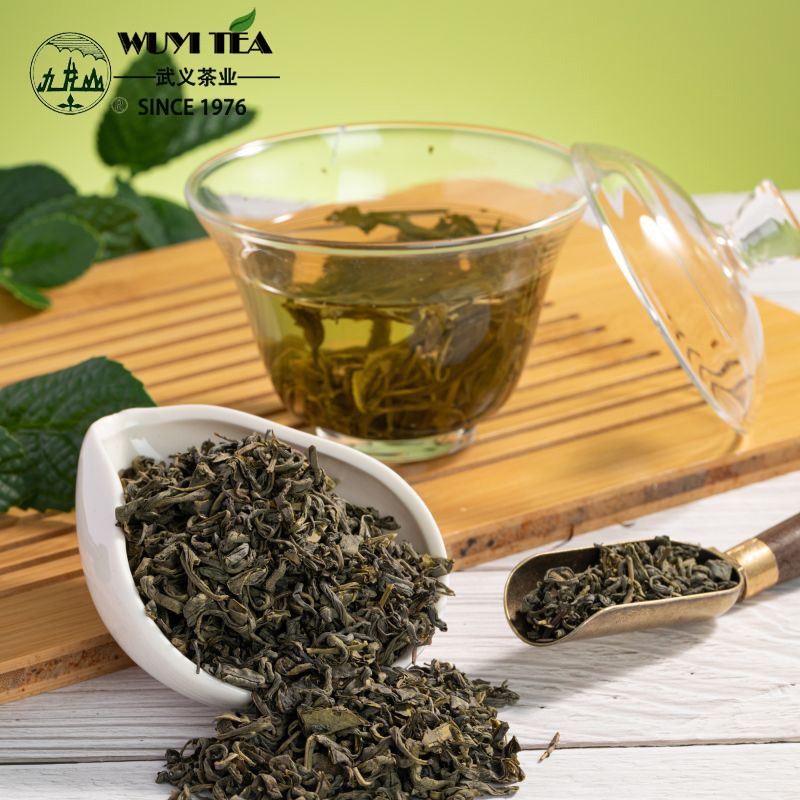
Green Tea Chunmee Tea, also written as Chun Mee, is a well-known style of Chinese green tea. Its name is commonly translated as "precious eyebrow," referring to the slender, curved appearance of the finished leaves. Unlike tea styles characterized by flat leaves, tightly rolled pearls, or fine needle-shaped buds, Chunmee is generally formed into narrow, slightly arched strips.
Chunmee belongs to the green tea family made from Camellia sinensis. During production, the fresh leaves are heated to limit enzymatic oxidation, then rolled and dried. This process helps preserve the green tea's characteristic color and develops its recognizable brisk, sometimes lightly roasted flavor.
One reason Chunmee remains popular is its versatility. It can be enjoyed as a straightforward hot beverage, served after meals, included in a daily tea routine, or prepared as a base for traditional mint tea. Depending on the grade and brewing strength, it may produce a light, refreshing cup or a more robust infusion.
Its curved leaf shape, lively flavor, practical brewing characteristics, and availability in different commercial grades make Chunmee a flexible option for both personal consumption and larger-scale tea supply.
2. Origin and Traditional Processing
Chunmee is associated with China's long-established green tea tradition. Jiangxi has historical significance in its development, while Zhejiang, Anhui, and other tea-producing areas also contribute to the broader Chinese Chunmee market. The final flavor is influenced by more than geographical origin alone: cultivar, harvest season, elevation, weather, leaf maturity, and processing expertise all matter.
From fresh leaves to finished tea
Producing consistent Chunmee tea requires attention at every stage. Small variations in heat, rolling pressure, or moisture can influence the finished leaf's appearance and the flavor released during brewing.
- Fresh leaf selection: Suitable leaves are harvested according to the intended product grade and flavor profile. Freshness and raw material condition provide the foundation for quality.
- Initial handling: Leaves may be allowed to lose some surface moisture before further processing. Appropriate handling helps prepare the leaves for shaping and heating.
- Heat fixation: The leaves are heated, often through pan-firing, to reduce enzymatic oxidation. Temperature control helps avoid an excessively raw, scorched, or flat flavor.
- Rolling and shaping: Mechanical or traditional rolling shapes the leaves into slender, curved strips. Rolling also affects the way flavor compounds are released during infusion.
- Drying and roasting: Controlled drying reduces moisture and helps develop the tea's aroma. Poorly controlled drying can leave unwanted odors or reduce freshness.
- Sorting and grading: Finished tea may be screened and sorted to separate different leaf sizes, broken pieces, stems, and fine particles according to product specifications.
- Packaging: Suitable packaging helps protect the tea against moisture, light, oxygen, and foreign odors during storage and transportation.
Each stage contributes to the final product. Attractive leaf shape alone does not guarantee a satisfying cup, and a strong aroma does not automatically mean that a batch is suitable for every market. Reliable quality assessment combines appearance, aroma, taste, consistency, and appropriate food-safety documentation.
3. Flavor, Aroma, and Appearance
For new drinkers, Chunmee's flavor is often best described as brisk and refreshing, with vegetal notes and a gentle tang. Depending on processing and grade, some batches may also have nutty, roasted, or lightly smoky characteristics. These differences are natural expressions of tea style and production, rather than evidence that flavoring has necessarily been added.
Recognizing the main quality characteristics
| Characteristic | What to Look For | Potential Warning Sign |
|---|---|---|
| Dry leaf shape | Slender, curved strips with a reasonably consistent appearance for the grade | Unexpectedly large amounts of dust, foreign material, or irregular fragments |
| Dry leaf aroma | Clean, characteristic tea aroma with appropriate roasted or vegetal notes | Musty, sour, damp, or distinctly contaminated odors |
| Liquor color | Generally clear, often yellow-green to golden yellow, depending on the tea and preparation | Unexpected turbidity or abnormal discoloration |
| Taste | Brisk, balanced, and appropriate to the chosen grade | Overwhelming bitterness, harsh astringency, or stale off-flavors |
| Aftertaste | A clean finish with a lingering tea character | A persistent unpleasant or musty sensation |
These observations are useful screening tools, but sensory evaluation cannot establish every aspect of quality or safety. Buyers who need verified compliance should also consider laboratory testing, traceability records, and the requirements of their destination market.
4. Everyday Drinking and Potential Benefits
Chunmee tea can be a convenient way to enjoy an unsweetened beverage throughout the day. Like other green teas, it naturally contains polyphenols, including catechins, as well as caffeine. Its actual composition varies with the raw leaves, processing, storage, and preparation method.
A refreshing alternative to sweetened drinks
When served without sugar or syrup, brewed Chunmee tea is generally a low-calorie beverage. Its lively flavor can make it appealing to people who want more variety in their daily hydration routine without relying on heavily sweetened drinks.
Antioxidant compounds in green tea
Green tea contains naturally occurring plant compounds that have been studied for their antioxidant activity. However, laboratory findings do not automatically translate into specific health outcomes for every tea drinker. Chunmee should be viewed as a beverage that can form part of a balanced diet, not as a treatment or guaranteed method for preventing disease.
Caffeine and personal tolerance
Chunmee contains caffeine, although the amount in a cup depends on leaf quantity, water temperature, steeping time, and serving size. People who are sensitive to caffeine may prefer smaller servings, weaker infusions, or earlier drinking times.
Those who are pregnant, managing a medical condition, or taking medication that may interact with caffeine should follow advice from an appropriate healthcare professional. Drinking more tea does not necessarily produce greater benefits, and excessive caffeine may contribute to restlessness, digestive discomfort, or sleep disruption in sensitive individuals.
5. How to Choose the Right Chunmee Tea
Choosing tea can be difficult when product descriptions rely on broad terms such as premium, classic, or extra strong. A better approach is to identify the intended drinking experience first, then assess the sample, product specifications, and supplier information against that goal.
Match the product to its intended use
| Purchase Priority | What to Evaluate | Practical Recommendation |
|---|---|---|
| Daily home drinking | Clean aroma, balanced taste, convenient preparation | Choose a grade that tastes pleasant at your normal brewing strength |
| Traditional mint tea | Flavor strength, compatibility with mint and sweetener, extraction performance | Test the tea in the actual recipe instead of judging it only as a plain infusion |
| Retail packaging | Appearance, freshness, pack protection, batch consistency | Assess samples and packaging together before finalizing a product |
| Wholesale supply | Specification consistency, available volume, documentation, delivery conditions | Agree on written specifications and approve a representative sample |
| Cost-sensitive applications | Cost per usable serving, breakage, flavor performance | Compare the actual brewed result rather than relying on purchase price alone |
Understand commercial grade numbers
Chunmee is sold in a range of commercial grades, including products identified by numbers such as 41022, 9366, 9367, and 9371. These designations are associated with trade specifications and leaf characteristics; they should not be treated as a universal quality ranking that works identically across every supplier.
Two suppliers offering tea under the same grade designation may deliver different sensory results because of differences in raw materials, processing, sorting, and quality controls. Buyers should therefore request the supplier's specification sheet and compare samples prepared under the same conditions.
Questions to ask before buying
- Where was the tea grown and processed?
- What is the product's grade, harvest information, and ingredient composition?
- Can the supplier provide representative samples from the intended production batch?
- What moisture, packaging, and storage specifications apply?
- Are relevant food-safety and laboratory documents available for the destination market?
- Can the supplier maintain consistent quality across repeat orders?
Before placing a large order, taste the sample, record the brewing parameters, and retain an approved reference sample where practical. This gives both parties a clearer basis for discussing quality if later batches differ.
6. A Practical Brewing Guide for Green Tea Chunmee Tea
Even good tea can taste disappointing when brewed with water that is too hot or left to steep for too long. Chunmee can develop pronounced bitterness and astringency under aggressive extraction. Starting with moderate water temperature and a controlled steeping time usually makes it easier to find a balanced cup.
Recommended starting parameters
| Parameter | Suggested Starting Point | Why It Matters |
|---|---|---|
| Dry tea | 2–3 g | Provides a useful starting amount for a single serving |
| Water volume | 250 ml | Makes the tea-to-water ratio easy to repeat |
| Water temperature | 80–85°C | Helps extract flavor without immediately overwhelming the cup |
| Steeping time | 1.5–3 minutes | Allows adjustment according to strength and personal preference |
| Additional infusion | Try a second infusion if the leaves remain flavorful | Reveals how the tea develops over repeated brewing |
These figures are starting points rather than strict rules. Leaf grade, particle size, water mineral content, vessel shape, and individual taste preferences can all change the result.
Step-by-step preparation
- Choose clean water. Fresh, pleasant-tasting water is a good foundation. If your tap water has a strong chlorine taste or excessive mineral character, try a suitable filtered alternative.
- Warm your cup or teapot. Rinsing the vessel with warm water can reduce temperature loss during brewing. Empty the warming water before adding the tea.
- Measure the leaves. Begin with approximately 2–3 g of Chunmee per 250 ml of water. Use a scale if you want to reproduce the same result consistently.
- Control the water temperature. Let freshly boiled water cool to around 80–85°C before pouring it over the leaves.
- Steep and taste. Start around two minutes, then taste. If the flavor is too light, extend the next infusion slightly rather than making several changes at once.
- Separate the leaves. Remove the infuser or decant the tea when it reaches the desired strength. Leaving the leaves in the cup can cause continued extraction and increasing bitterness.
- Adjust gradually. Change only one variable at a time—tea quantity, temperature, or steeping time—until the flavor suits you.
For traditional mint tea, the preparation may involve a stronger extraction, fresh mint, and sweetener according to regional preference. In that case, evaluate Chunmee in the complete recipe because the best grade for a plain cup may not necessarily be the best option for a strongly flavored blend.
7. Common Brewing Mistakes and Practical Solutions
When a cup tastes unpleasant, replacing the tea is not always the first step. Small changes to preparation can often identify the source of the problem and reduce waste.
Why does Chunmee tea taste too bitter?
Common causes include water that is too hot, excessive steeping time, too much leaf relative to water, or a naturally strong tea grade. Try reducing the water temperature to approximately 75–80°C or shortening the steep to 60–90 seconds. If necessary, reduce the quantity of tea slightly.
Why does the tea taste weak or flat?
Weak flavor may result from too little tea, a short steep, cool water, or leaves that have lost their freshness. Increase the leaf quantity modestly or extend the steep in small increments. If the dry tea has little aroma and the infusion remains dull, poor storage or age may be contributing factors.
Why is the infusion cloudy?
Fine leaf particles, water chemistry, and preparation conditions can affect clarity. Check whether the tea contains excessive dust, use a suitable infuser, and try different clean water. However, cloudiness accompanied by unusual odors or signs of moisture damage should not be dismissed as a brewing issue.
How can the same tea taste different from one day to the next?
Differences in water, measuring accuracy, temperature, steeping time, and the amount of tea left in the infuser can change the result. A simple brewing record helps isolate the variable responsible for inconsistent flavor.
When the tea is too bitter, begin by reducing temperature or steeping time. When it is too weak, increase extraction gradually. When it smells musty or otherwise abnormal, stop brewing and investigate the product's condition instead of attempting to mask the odor.
8. Storage and Freshness Protection
Green tea is sensitive to environmental conditions. Exposure to moisture, heat, oxygen, light, and strong odors can gradually reduce its aroma and alter its taste. Proper storage is especially important in warm or humid climates and for buyers who hold stock for extended periods.
Best practices for home storage
- Use an airtight container: Close the container securely after each serving to limit exposure to air and humidity.
- Keep it away from light: An opaque container or a closed cupboard helps protect the leaves from unnecessary light exposure.
- Avoid heat: Store tea away from ovens, stovetops, sunny windows, and other warm locations.
- Prevent odor absorption: Keep tea away from spices, coffee, detergents, and strongly scented products.
- Control moisture: Always use a dry spoon and avoid allowing steam or water to enter the container.
- Follow date guidance: Observe the manufacturer's storage recommendations and best-before information. Flavor quality may decline before the printed date under poor storage conditions.
Should Chunmee tea be refrigerated?
Refrigeration is not essential for every household pack. It may be useful in certain controlled storage situations, but temperature changes can cause condensation when a cold package is opened in a warm, humid environment. If refrigeration is used for longer-term storage, tea should be sealed in moisture-resistant packaging and allowed to reach room temperature before opening.
For most everyday users, a cool, dry, dark cupboard and an airtight container are straightforward choices. For commercial stock, packaging performance, warehouse conditions, inventory rotation, and shipment duration should be considered together.
9. What Wholesale Buyers Should Consider
For importers, distributors, retailers, and hospitality businesses, buying Chunmee tea involves more than selecting an appealing sample. Product consistency, order planning, documentation, packaging, and communication with the supplier all affect the experience after delivery.
Define a clear product specification
Before confirming an order, establish the product grade, appearance expectations, flavor profile, packaging format, net weight, moisture limits, and any applicable contaminant or residue requirements. Specific limits should be based on the agreed product specification and relevant destination-market regulations, rather than assumptions that every tea grade has identical requirements.
Evaluate samples under realistic conditions
For retail programs, compare aroma, appearance, and taste using a repeatable brewing method. For food-service or mint-tea applications, also test the product in the actual serving recipe. This helps reveal whether the tea can deliver the required strength and flavor without unnecessary waste.
Confirm packaging and transport arrangements
Long-distance transport can expose tea to changing temperatures and humidity. Discuss moisture-resistant inner packaging, outer-carton strength, shipment conditions, batch identification, and storage instructions with the supplier. Packaging should be appropriate for the expected transit time and local warehouse environment.
Check documentation and traceability
Depending on the destination and transaction, useful records may include product specifications, batch identification, certificates of analysis, relevant pesticide-residue or contaminant test reports, and other documents required by the importing market. Confirm the applicable requirements before shipment and verify that documents correspond to the actual product batch.
Plan for repeat orders
A reliable supply relationship depends on clear specifications and consistent communication. Buyers should discuss anticipated order quantities, production lead times, sample approval, acceptable variation, and procedures for handling discrepancies. Keeping an approved reference sample and written product requirements can make repeat purchasing more predictable.
ZheJing WuYi Tea Industy CO., Ltd. can be included in your supplier research when exploring tea-related sourcing opportunities. Prospective buyers should contact the company directly to confirm its current product range, available Chunmee specifications, production capabilities, packaging options, and applicable documentation before making purchasing decisions.
10. Frequently Asked Questions About Green Tea Chunmee Tea
1. What is Green Tea Chunmee Tea?
Chunmee is a traditional Chinese green tea known for its slender, curved leaves and brisk flavor. Depending on the grade and processing, its taste may include vegetal, nutty, roasted, or gently tangy notes.
2. Why is Chunmee tea called precious eyebrow tea?
The name refers to the curved, eyebrow-like shape of the processed leaves. This distinctive appearance is one of the most recognizable features of the tea style.
3. What does Chunmee green tea taste like?
It commonly has a lively, brisk character with a refreshing vegetal profile and some tanginess. Depending on the product, a mild roasted or nutty aroma may also be present. Brewing temperature and time strongly influence the perceived bitterness and astringency.
4. What is the best water temperature for brewing Chunmee tea?
A practical starting range is 80–85°C. More delicate products may taste better at a lower temperature, while some robust grades tolerate hotter water. Adjust according to the flavor you want to achieve.
5. How long should Chunmee tea steep?
Start with approximately 1.5–3 minutes for a 250 ml serving, using around 2–3 g of tea. Shorter steeping generally produces a lighter cup, while longer steeping can increase strength and astringency.
6. Does Chunmee green tea contain caffeine?
Yes. Chunmee naturally contains caffeine. The amount varies according to the tea leaves and preparation method, so people who are sensitive to caffeine should adjust their intake accordingly.
7. Can Chunmee tea be used to make mint tea?
Yes. Chunmee is used as a base for mint tea in some traditional preparations. A suitable grade should provide enough body and briskness to complement fresh mint and the chosen level of sweetness. Test the tea in the complete recipe before selecting it for commercial use.
8. How should Chunmee tea be stored after opening?
Keep it in an airtight container in a cool, dry, dark place away from strong odors. Prevent moisture from entering the container and follow the storage guidance provided with the product.
9. How can buyers compare different Chunmee grades?
Review the supplier's grade specifications, then compare representative samples for leaf appearance, aroma, infusion color, taste, and consistency. Grade numbers alone are not sufficient to establish every aspect of quality.
10. What should importers check before placing a bulk Chunmee order?
Confirm the product specification, sample approval, order quantity, packaging, delivery schedule, batch traceability, and applicable food-safety documentation. Buyers should also establish how quality variations or shipment issues will be handled.
11. How can you tell whether Chunmee tea has lost its freshness?
A noticeable loss of aroma, a flat or stale taste, or an unusual odor can indicate deterioration. Tea that smells musty or shows signs of moisture damage should not be consumed. Proper packaging and storage help maintain its intended flavor.
12. Is Chunmee tea suitable for everyday drinking?
Many people enjoy Chunmee as an everyday beverage. However, it contains caffeine, and individual tolerance varies. Moderate consumption and attention to personal dietary needs are sensible approaches.
Conclusion: Make Every Cup of Chunmee Tea Count
Green Tea Chunmee Tea offers a practical combination of traditional Chinese tea craftsmanship, a distinctive curved leaf appearance, and a refreshing, brisk flavor. Its versatility makes it suitable for a range of drinking preferences, from a simple afternoon cup to stronger mint-tea preparations and commercial beverage applications.
The best results come from understanding the product rather than relying on appearance or grade labels alone. Select tea according to your intended use, brew with appropriate water temperature and steeping time, protect the leaves from moisture and heat, and assess supplier quality through representative samples and clear specifications.
For commercial buyers, these same principles support more consistent purchasing decisions, better inventory management, and stronger customer satisfaction. Careful evaluation before an order can help reduce avoidable quality problems and establish a clearer foundation for long-term supply relationships.
Looking for a Green Tea Chunmee Tea Supply Partner?
Whether you are sourcing tea for retail distribution, food service, traditional mint tea, or wholesale trade, choosing the right product starts with clear requirements and reliable communication. Connect with ZheJing WuYi Tea Industy CO., Ltd. to discuss your sourcing needs, request product information, and learn more about available options. Contact us to explore suitable specifications, packaging requirements, and potential supply arrangements for your market.