

How Can Long Term Fermented Corn Silage Improve Feed Stability and Farm Efficiency?
2026-09-03
Long Term Fermented Corn Silage is an important feed preservation solution for livestock farms that need a dependable supply of high-quality forage beyond the normal harvesting season. Through controlled anaerobic fermentation, corn plants are preserved by converting water-soluble carbohydrates into organic acids, especially lactic acid, which helps reduce pH and suppress undesirable microorganisms. Proper fermentation and oxygen exclusion are therefore essential for maintaining silage quality during extended storage.
For farms managing seasonal corn production, fluctuating feed costs, or large herds, long-term storage can provide greater flexibility in feed planning. However, simply storing corn for a long period does not guarantee good results. Harvest maturity, moisture, chopping, compaction, sealing, fermentation management, and feed-out practices all influence the final nutritional and physical quality.
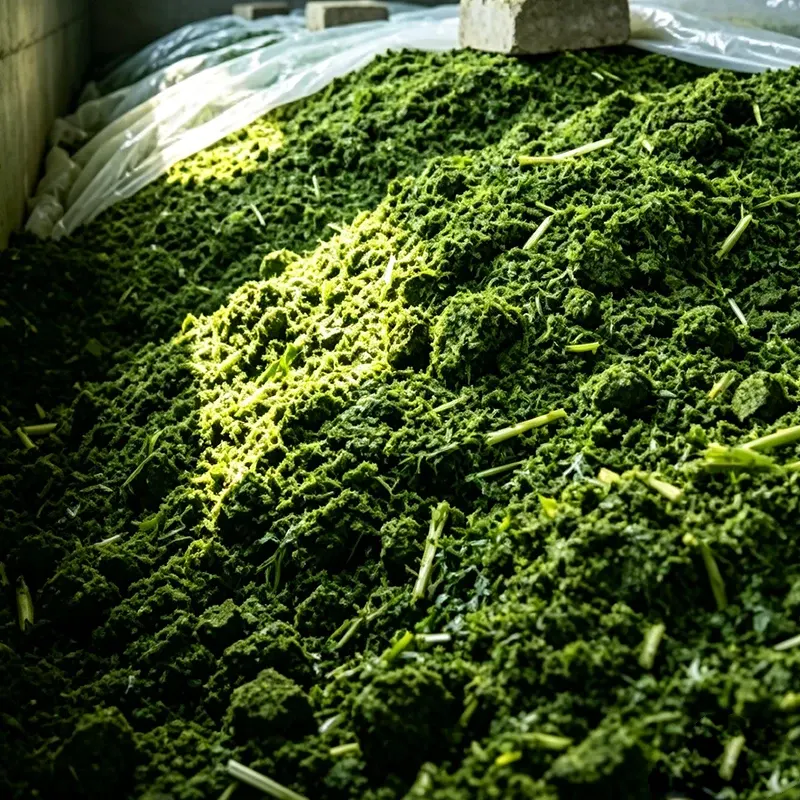
What Is Long Term Fermented Corn Silage?
Long Term Fermented Corn Silage refers to whole-plant corn that has undergone anaerobic fermentation and is preserved for an extended storage period before feeding. During the initial fermentation stage, lactic acid bacteria consume fermentable sugars and produce organic acids, rapidly lowering the pH. Once oxygen is effectively excluded and fermentation stabilizes, the silage can remain preserved for months when storage conditions are properly maintained.
Research has shown that storage length can influence fermentation products and nutritional characteristics. For example, studies evaluating corn silage stored for up to 360 days observed changes in acetic acid, soluble nitrogen, ammonia nitrogen, and starch digestibility over time. This means that long-term storage should be considered when evaluating feed quality and formulating rations.
Why Is Long-Term Fermentation Important?
The main value of long-term fermentation is feed preservation and supply stability.
Well-managed silage can help farmers:
- Preserve harvested corn for future feeding.
- Reduce dependence on fresh forage availability.
- Maintain a more consistent feed supply throughout the year.
- Better manage seasonal production peaks.
- Reduce unnecessary feed waste caused by poor preservation.
- Support more predictable herd feeding programs.
- Improve flexibility in large-scale livestock operations.
A key consideration is oxygen control. During storage, oxygen penetration can stimulate yeast and mold growth, leading to heating, dry matter loss, and deterioration.
How Does Long Term Fermented Corn Silage Work?
The fermentation process can generally be understood through several stages:
| Stage | Main Process | Main Objective |
|---|---|---|
| Harvest | Corn is harvested at suitable maturity and moisture | Protect nutrient potential |
| Chopping | Plants are cut into manageable particle sizes | Improve packing and fermentation |
| Packing | Air is removed through effective compaction | Create anaerobic conditions |
| Fermentation | Lactic acid bacteria convert sugars into acids | Lower pH and stabilize silage |
| Long-term storage | Stable silage remains sealed | Preserve feed quality |
| Feed-out | Silage is exposed gradually | Minimize aerobic deterioration |
Proper moisture is particularly important. Extension guidance commonly recommends approximately 30–35% dry matter for bunker storage, although the appropriate target depends on the storage system and management conditions.
What Determines the Quality of Long Term Fermented Corn Silage?
Long-term storage starts with good silage-making practices rather than the storage period itself.
1. Harvest at the Right Stage
Harvest maturity affects dry matter, starch availability, fiber characteristics, and fermentation performance. Harvesting too early can create excessively wet material, while harvesting too late may make adequate compaction and oxygen exclusion more difficult.
2. Control Particle Size
Uniform chopping helps create a dense silage mass. Proper processing also supports effective packing and can influence how cattle utilize the forage.
3. Achieve High Packing Density
Air is one of the major enemies of stored silage. Insufficient compaction leaves oxygen pockets that encourage undesirable microbial activity.
4. Maintain an Effective Seal
Plastic covers, bags, bunker walls, and other storage systems should prevent oxygen from entering the stored material. Even small tears or poorly sealed areas can contribute to quality losses.
5. Manage Feed-Out Carefully
Long-term fermented silage can deteriorate quickly after exposure to oxygen. Yeasts and molds can consume residual nutrients and fermentation products, generating heat and reducing dry matter recovery.
What Are the Practical Effects of Long Term Fermented Corn Silage?
When properly produced and stored, Long Term Fermented Corn Silage can provide several practical advantages for livestock producers.
More stable feed availability: Farmers can preserve a large harvest and use it progressively according to herd requirements.
Better seasonal planning: Stored forage creates a buffer between harvesting seasons and helps reduce dependence on short-term feed purchases.
Potentially improved starch utilization: Research indicates that starch digestibility can increase during storage, although the magnitude depends on corn characteristics, processing, and storage conditions.
Improved operational efficiency: Large quantities can be harvested and preserved during the optimal production window, reducing pressure to secure fresh forage continuously.
However, these benefits are conditional on good management. Long storage cannot compensate for poor harvesting, inadequate fermentation, oxygen exposure, or improper feed-out.
Why Does Custom Silage Equipment Design Matter?
For commercial farms and agricultural projects, customization is an increasingly important advantage. Different farms have different storage capacities, production scales, transportation arrangements, climates, and feeding systems. A standardized equipment configuration may not always match these requirements.
Hebei Yiman Agricultural Technology Co., Ltd. focuses on agricultural technology solutions and can support customized silage equipment configurations, helping customers develop solutions around their actual operating conditions.
Customization can include considerations such as:
- Equipment capacity
- Processing requirements
- Storage scale
- Feeding volume
- Transportation conditions
- Farm layout
- Production workflow
- Installation requirements
- Customer-specific technical specifications
This flexibility is particularly valuable for farms that need to handle large volumes of corn and maintain efficient long-term storage operations. Instead of forcing a farm to adapt completely to standard equipment, a customized solution can be designed around the farm's production process.
Customization Advantage at a Glance
| Customer Requirement | Customized Approach |
|---|---|
| Different production capacity | Adapt equipment capacity |
| Limited farm space | Optimize equipment configuration |
| Large-scale livestock feeding | Match processing and storage demand |
| Special operating conditions | Adjust technical specifications |
| Different transportation systems | Coordinate equipment layout |
| Long-term expansion plans | Consider scalable configurations |
How Can Farms Get Better Results?
A practical Long Term Fermented Corn Silage management program should focus on the entire production chain rather than fermentation alone.
- Select suitable corn varieties and harvest at the appropriate maturity.
- Monitor dry matter and moisture before ensiling.
- Use consistent chopping and effective processing.
- Pack the material thoroughly to remove trapped oxygen.
- Seal the storage structure immediately and inspect it regularly.
- Allow sufficient fermentation before routine feeding.
- Minimize oxygen exposure during feed-out.
- Monitor silage appearance, odor, temperature, and laboratory indicators when necessary.
- Adjust rations according to actual nutrient analysis and storage duration.
Long-term storage should be viewed as a complete management system. A 2024 study examining corn silage stored for around 210–220 days also demonstrated that fermentation characteristics and aerobic stability can be influenced by inoculant strategy and storage conditions.
Why Choose Hebei Yiman Agricultural Technology Co., Ltd.?
For agricultural businesses seeking dependable silage solutions, the value of a supplier goes beyond supplying individual equipment. Technical compatibility, production capacity, customization capability, and long-term operational requirements should all be considered.
Hebei Yiman Agricultural Technology Co., Ltd. can provide a customer-oriented approach to agricultural technology solutions, with particular attention to customized configurations. Whether a project requires a particular capacity, workflow, layout, or application requirement, support for equipment customization can help customers build a solution that better fits their actual farming operation.
For farms planning large-scale Long Term Fermented Corn Silage production, this customized approach can help connect harvesting, processing, storage, transportation, and feeding into a more practical workflow.
FAQ
How long can corn silage be fermented?
Corn silage commonly reaches a stable fermentation condition within the early weeks after ensiling, but it can then remain stored for months when oxygen is effectively excluded. Research has evaluated corn silage stored for periods ranging from several weeks to 360 days.
Does longer storage always mean better silage?
No. Longer storage does not automatically improve quality. Storage conditions, fermentation profile, dry matter, oxygen exposure, temperature, and feed-out management all affect the final result.
Why is oxygen exclusion important?
Oxygen promotes yeast and mold activity, which can cause heating, nutrient consumption, and dry matter losses. Maintaining anaerobic conditions is therefore fundamental to long-term preservation.
Can silage equipment be customized?
Yes. Equipment configuration can be adapted according to production capacity, farm layout, storage requirements, processing needs, and other project-specific conditions. Hebei Yiman Agricultural Technology Co., Ltd. supports customized solutions, making this an important consideration for farms with non-standard requirements.
What should buyers consider when selecting silage equipment?
Capacity, material compatibility, processing efficiency, storage workflow, maintenance requirements, installation conditions, and customization capability should all be evaluated rather than focusing only on the initial purchase price.
Build a More Flexible Long-Term Feed Strategy
High-quality Long Term Fermented Corn Silage is not simply the result of leaving corn in storage for an extended period. It depends on proper harvesting, controlled fermentation, effective oxygen exclusion, suitable storage, and disciplined feed-out management. When these elements work together, farms can establish a more stable forage supply and improve their ability to manage seasonal feed demand.
For agricultural operations with specific capacity, layout, or processing requirements, customization can make the difference between a standard solution and a truly practical one. Hebei Yiman Agricultural Technology Co., Ltd. is ready to support customers with tailored agricultural technology solutions designed around individual project needs. Contact us to discuss your Long Term Fermented Corn Silage requirements and explore a customized solution for your operation.