

How Does Food Carton Packing Keep Pizza Crisp During Delivery?
2026-11-12
A pizzeria owner receives the same complaint three times in one week: the pizza arrives soggy in the center. The oven is calibrated, the dough recipe has not changed, and the delivery time is under 25 minutes. The problem is the packaging. The Food Carton Packing traps the steam that rises from the hot pizza, and the steam condenses on the inside of the lid. The condensate drips back onto the crust, and the crust loses its crispness. The solution is not a thicker box. It is a box that manages moisture. This guide explains how the carton design, the board grade, and the venting control the moisture and keep the pizza crisp.
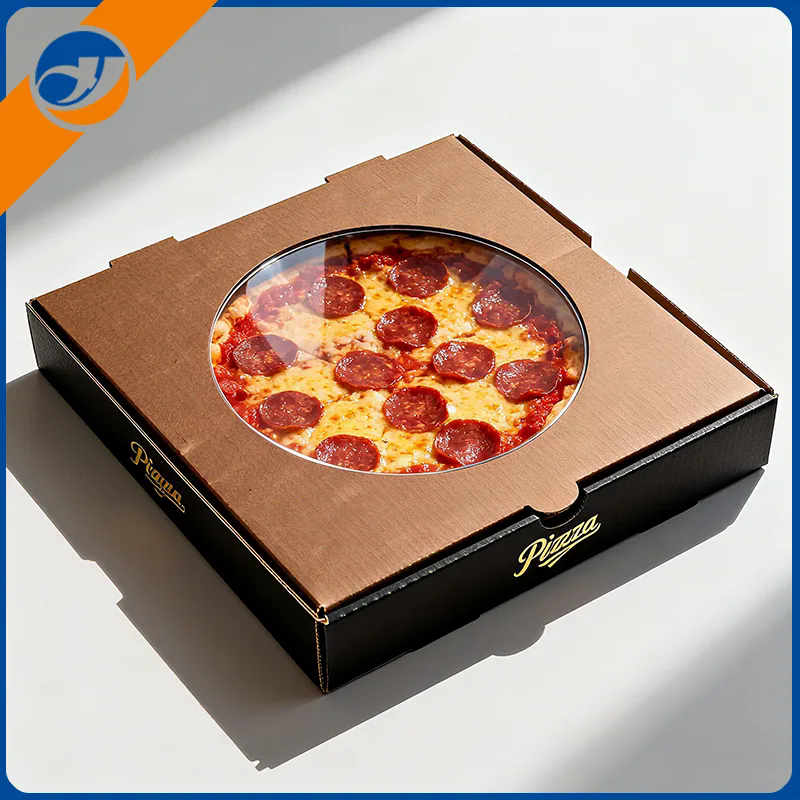
1. Why Is Steam the Main Enemy of Pizza Crispness During Delivery?
A pizza leaving the oven at 90 degrees Celsius carries a large amount of water vapor. The crust continues to release moisture as it cools inside the closed carton. If the moisture cannot escape, the relative humidity inside the box rises above 90 percent within a few minutes. The crust surface absorbs the moisture and loses its crisp texture. The cheese and toppings also release moisture, which adds to the problem. Our factory designs Food Carton Packing to allow a controlled release of this moisture while keeping the pizza warm. Qingdao Zemeijia Packaging Products Co., Ltd. has been manufacturing pizza cartons for over 12 years.
The physics is simple. The moisture must leave the box, but it must leave in a way that does not let the heat escape too quickly. The carton must balance ventilation against thermal insulation. A box with no vents traps the moisture. A box with too many vents cools the pizza and defeats the purpose of the delivery. The design must be tuned to the pizza size, the delivery time, and the climate.
2. How Does the Board Grade and Coating Control Moisture Transmission?
The board grade determines how fast the moisture can pass through the carton wall. A single wall corrugated board with a 1.5 millimeter flute has a higher moisture vapor transmission rate than a double wall board. The coating also matters. An uncoated kraft board absorbs some moisture, which helps to reduce the condensation on the lid, but it also weakens the board and can transfer moisture to the pizza. A clay coated board resists moisture but reflects the steam back into the box. The table below shows the relationship between board grade and moisture vapor transmission rate.
| Board grade | Thickness | Moisture vapor transmission rate | Effect on pizza crispness |
| Single wall, uncoated kraft | 1.5 mm | High | Good moisture release, weak box |
| Single wall, clay coated | 1.5 mm | Low | Traps moisture, crispness fails |
| Double wall, uncoated kraft | 3.0 mm | Moderate | Good insulation, moderate moisture release |
| Double wall, polyethylene coated | 3.0 mm | Very low | Traps moisture and grease, crispness fails |
| Single wall, perforated kraft | 1.5 mm | Very high | Best moisture release, requires vent design |
In our factory, the standard board for pizza delivery is a single wall uncoated kraft board with a 1.5 millimeter flute. The uncoated surface absorbs a small amount of moisture and releases it through the flute, which reduces the condensation on the lid. We also offer a double wall board for long delivery times or for cold climates, where the additional insulation is important. The clay coated and polyethylene coated boards are used for frozen pizza and for retail display, not for hot delivery. Qingdao Zemeijia Packaging Products Co., Ltd. provides the board grade recommendation for each delivery scenario.
3. How Do Vent Holes and Lid Design Prevent Condensation Drip?
The vent holes are the most direct way to release moisture. The vents are small holes punched in the lid or the side wall. They allow the steam to escape and the air to circulate. The size, the number, and the position of the vents determine the balance between moisture release and heat loss. A small number of 6 millimeter holes in the lid is usually sufficient for a 12 inch pizza. The vents should be placed away from the center of the pizza so that the drips do not fall on the cheese. The lid design also matters. A domed lid provides a larger air space above the pizza, which reduces the contact between the moist air and the crust. A flat lid brings the condensate closer to the pizza. The table below shows the vent configurations and their effect.
| Vent configuration | Moisture release | Heat retention | Typical use |
| No vents, flat lid | Very low | High | Short delivery, thick crust |
| 2 holes, 6 mm, flat lid | Moderate | Moderate | Standard delivery, thin crust |
| 4 holes, 6 mm, domed lid | High | Moderate | Long delivery, humid climate |
| 6 holes, 8 mm, domed lid | Very high | Low | Very humid climate, short distance |
| Perforated side wall, flat lid | High | Low | High volume, quick delivery |
Packaging engineer's note: The vent design is often the cheapest fix for a soggy pizza complaint. A carton with two 6 millimeter holes in the lid and a 20 millimeter dome will keep a thin crust pizza crisp for a 25 minute delivery in most climates. A carton with no vents will produce condensation within 5 minutes. In our factory, we recommend that the pizzeria test two or three vent configurations with the actual pizza and the actual delivery route before choosing the final design. Qingdao Zemeijia Packaging Products Co., Ltd. provides sample cartons with different vent configurations for the trial.
4. Why Does Box Strength and Stacking Affect the Crispness Outcome?
A pizza carton that collapses under the weight of another carton will press the lid onto the cheese. The contact transfers moisture from the cheese to the lid and back to the pizza. The collapse also reduces the air space above the pizza, which increases the humidity at the crust surface. The board grade and the corner construction determine the stacking strength. A single wall board with a 1.5 millimeter flute can support a stack of three cartons if the corners are well formed. A double wall board can support a stack of five or more. Our factory tests the compression strength of every carton design according to the ASTM D642 standard. We also recommend that the pizzeria use a delivery bag with a rigid base to prevent the cartons from shifting during transport.
The corner construction is important because the corners carry most of the stacking load. A corner that is not square or that is not glued properly will crush under load and the lid will sag. Our production line uses a precision die cutting and gluing process that keeps the corners square and the glue bead continuous. Qingdao Zemeijia Packaging Products Co., Ltd. inspects the corner squareness and the glue bead on every production lot.
5. How Should Pizzerias Specify and Verify Food Carton Packing for Crisp Delivery?
The specification should include the pizza size, the delivery time, the climate, the board grade, the coating, the vent configuration, the lid style, and the stacking requirement. The verification should include a sample test with the actual pizza, a compression test, and a condensation check after 20 minutes in the closed carton. In our factory, we provide the sample cartons and the test protocol for the trial. We also provide the board certificate and the compression test report with each shipment. Zemeijia recommends that the pizzeria record the delivery time and the complaint rate before and after switching the carton design, so that the improvement can be measured.
We recommend that the pizzeria avoid the polyethylene coated board for hot delivery, even though it is grease resistant. The coating traps the moisture and guarantees a soggy crust. A better choice is a grease resistant uncoated board with a small amount of venting. The uncoated board absorbs the grease at the surface and still allows the moisture to pass through the flute.
Frequently Asked Questions About Food Carton Packing and Pizza Crispness
Food Carton Packing keeps pizza crisp during delivery by controlling the moisture that the hot pizza releases inside the closed box. The board grade and the coating determine how fast the moisture can pass through the carton wall. The vent holes and the lid design determine how fast the moisture can escape into the air. The box strength determines whether the lid stays above the pizza or presses down and transfers moisture. The specification should include the pizza size, the delivery time, the climate, the board grade, the vent configuration, the lid style, and the stacking requirement. The verification should include a sample test with the actual pizza and a compression test. When these factors are managed, the pizza arrives crisp and the complaint rate drops.