

Article Summary: Achieving a crispy, golden, and consistently coated fried food product requires more than selecting good raw ingredients. The performance of the breading system plays an equally important role. Frying and Breading Potato Starch is a functional ingredient that helps improve coating adhesion, develop an appealing fried texture, and support consistent processing performance.
This guide explores how potato starch works in frying applications, its key functional benefits, practical formulation considerations, and its applications in commercial food production. It also explains what food manufacturers should evaluate when sourcing potato starch for breading systems.
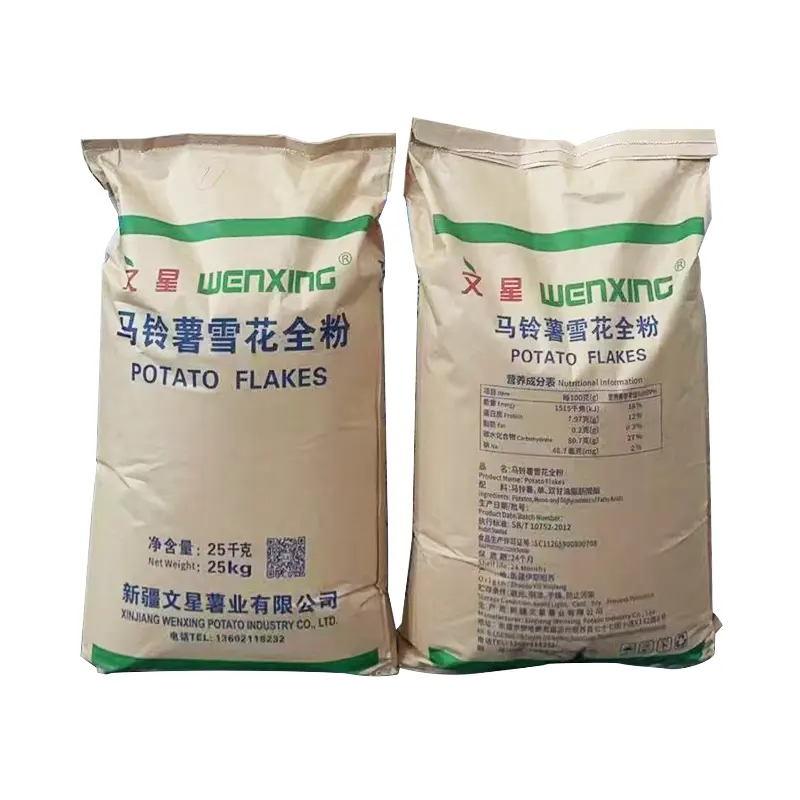
1. Understanding Frying and Breading Potato Starch
Fried foods are popular across international markets because of their appealing appearance, satisfying crunch, and rich flavor. From fried chicken and fish fillets to shrimp, vegetable snacks, and frozen breaded products, consumers expect a coating that stays attached, develops an attractive color, and maintains its texture after cooking.
However, producing these characteristics consistently can be challenging for food manufacturers. Traditional flour-based coatings may not always provide the desired crispness or adhesion, especially when products undergo freezing, transportation, reheating, or high-volume frying.
This is where Frying and Breading Potato Starch becomes valuable.
Potato starch is extracted from potatoes and used as a functional ingredient in many food processing applications. Its swelling and gelatinization properties make it useful in coating formulations. When properly incorporated into a breading system, it can help create a cohesive coating structure and contribute to the crispy texture expected from fried foods.
Specially developed frying and breading potato starch is designed around the processing requirements of fried food manufacturers. Its purpose is not simply to increase the starch content of a formula, but to help improve coating performance and production consistency.
2. Why Potato Starch Matters in Fried Food Production
In commercial frying, the coating is an important part of the finished product. It influences appearance, texture, flavor delivery, handling performance, and consumer satisfaction.
2.1 Maintaining Strong Coating Adhesion
One of the most common problems in breaded food production is coating separation. When breading does not adhere properly to the ingredient surface, it may fall off during handling, frying, freezing, or transportation.
A well-designed potato starch formulation can help improve the cohesion of the coating system. Its gelatinization behavior contributes to the formation of a starch structure that helps bind coating ingredients together under suitable processing conditions.
2.2 Developing a Crispy Exterior
Consumers often associate high-quality fried food with a crisp outer layer and a tender interior. The coating must develop an appropriate structure during frying without becoming excessively hard, dense, or soggy.
Potato starch can contribute to a light, crisp coating by influencing the structure formed during heating and moisture removal. The final result depends on the overall recipe, particle size, oil temperature, frying time, and product moisture content.
2.3 Supporting Consistent Commercial Production
Food factories need formulations that can perform reliably across production batches. Inconsistent coating behavior may lead to uneven appearance, excessive product losses, and additional quality control costs.
Using a suitable functional starch ingredient can help manufacturers develop more repeatable coating systems when combined with controlled mixing, application, and frying conditions.
3. Key Functional Benefits of Potato Starch
Frying and Breading Potato Starch offers several functional characteristics that make it suitable for fried food formulations.
3.1 Improved Binding and Cohesion
Coating adhesion is essential for products such as chicken nuggets, fish fillets, and breaded shrimp. Potato starch can contribute to a cohesive coating structure, helping reduce loose breading and uneven coverage when used in an appropriate formula.
This is particularly important for automated production lines, where products pass through multiple stages of coating, transferring, and frying.
3.2 Crisp Texture Development
Potato starch has useful gelatinization and swelling properties. During frying, moisture and heat transform the coating structure, helping produce a crisp exterior when the formula and frying conditions are properly controlled.
Manufacturers can adjust starch proportions and combine potato starch with other functional ingredients to achieve different textures, from a delicate crisp layer to a more substantial crunchy coating.
3.3 Attractive Golden Appearance
Visual appearance plays an important role in purchasing decisions. A well-developed coating should have an appealing and relatively uniform color.
Potato starch can contribute to coating structure and surface characteristics, while the final golden color is also influenced by proteins, sugars, seasonings, frying temperature, and cooking time.
3.4 Processing Adaptability
Different manufacturers use different breading systems and frying equipment. Potato starch can be incorporated into dry breading blends, batter systems, and composite coating formulations, depending on the product requirements.
Its compatibility with ingredients such as wheat flour, tapioca starch, rice flour, salt, and seasonings provides opportunities for formulation development.
3.5 Potential Support for Oil Management
The structure of a fried coating affects how moisture escapes and how oil interacts with the finished product. A properly designed coating may help control surface characteristics and contribute to the desired eating experience.
However, oil absorption is affected by many variables, including frying temperature, frying duration, product geometry, moisture content, and cooling conditions. Potato starch should not be considered a guaranteed oil-reduction solution without controlled testing.
| Functional Characteristic | Potential Processing Benefit | Manufacturer's Objective |
|---|---|---|
| Binding properties | Supports coating cohesion | Reduce breading loss |
| Gelatinization behavior | Contributes to coating structure | Develop a stable coating |
| Texture modification | Helps develop crispness | Improve eating quality |
| Formulation compatibility | Works with other coating ingredients | Develop customized recipes |
| Processing adaptability | Can be evaluated in different coating systems | Support production flexibility |
4. How Potato Starch Works During Frying
Understanding the behavior of potato starch during processing helps manufacturers design more effective breading formulations.
Stage 1: Ingredient Mixing
Potato starch is blended with other dry ingredients or incorporated into a liquid batter, depending on the coating system. Uniform dispersion is important because starch agglomerates can create inconsistent coating distribution.
Stage 2: Coating Application
The coating is applied to the food surface through a suitable process, such as pre-dusting, battering, or breading. The formulation should provide sufficient adhesion without creating excessive thickness or uneven coverage.
Stage 3: Heating and Gelatinization
When exposed to moisture and heat, potato starch granules undergo gelatinization. Their structure changes as they absorb water and swell, contributing to the development of the coating matrix.
This stage is important for establishing the structure that supports the final coating texture.
Stage 4: Moisture Removal and Crust Formation
As frying continues, water escapes from the coating and the surface becomes progressively drier. The resulting structure develops the crispness associated with fried products.
Stage 5: Cooling and Quality Evaluation
After frying, the product should be evaluated for coating adhesion, color, crispness, oiliness, and texture retention. For frozen products, additional tests after freezing, storage, and reheating are recommended.
5. Major Food Applications of Frying and Breading Potato Starch
Potato starch can serve as a functional component in many fried food formulations. Its application depends on the target texture, coating thickness, processing method, and product characteristics.
5.1 Fried Chicken and Chicken Nuggets
Fried chicken requires a coating that adheres well to the meat while developing a satisfying crunchy exterior. Potato starch can be incorporated into the coating formula to help improve cohesion and texture.
For chicken nuggets and popcorn chicken, a consistent coating is particularly important because these products are usually manufactured in large quantities and may undergo freezing before distribution.
5.2 Breaded Fish and Seafood
Fish fillets, shrimp, squid rings, and seafood snacks require coatings that complement their delicate internal texture.
Potato starch can be used in batter and breading formulations to help develop a crisp outer layer while maintaining the desired balance between coating and seafood.
5.3 Fried Vegetables and Plant-Based Snacks
Vegetable products such as mushrooms, onion rings, eggplant, and vegetable fritters have different moisture levels and surface characteristics.
A suitable potato starch formulation can help manufacturers create coatings that improve texture and provide more consistent coverage.
5.4 Frozen Breaded Food Products
Frozen food manufacturers face additional challenges because coated products may experience freezing, storage, transportation, and reheating.
Potato starch can be considered as part of a broader coating formulation designed to maintain adhesion and texture through these processing stages. Freeze-thaw stability and reheating performance should be confirmed through product-specific testing.
5.5 Restaurant and Foodservice Products
Restaurant chains and commercial kitchens need ingredients that support standardized recipes and predictable results.
Potato starch is suitable for evaluation in coating blends used for fried chicken, pork cutlets, crispy seafood, and various fried snacks.
| Application | Main Challenge | Potential Role of Potato Starch |
|---|---|---|
| Fried chicken | Coating separation and inconsistent crunch | Support binding and texture |
| Chicken nuggets | Batch-to-batch consistency | Contribute to coating structure |
| Breaded fish | Delicate product surfaces | Support uniform coating |
| Fried shrimp | Coating adhesion | Improve formulation cohesion |
| Vegetable snacks | Variable moisture content | Help modify coating texture |
| Frozen fried foods | Texture changes after reheating | Support coating formulation development |
6. How to Use Potato Starch in Breading Formulations
There is no single formulation that works for every fried food product. Manufacturers should determine the appropriate ingredient combination based on raw material characteristics, processing equipment, and the desired finished texture.
6.1 Develop a Balanced Ingredient System
Potato starch can be combined with several ingredients to achieve different coating characteristics.
- Wheat flour: Provides structure and contributes to coating body.
- Tapioca starch: Can modify elasticity, texture, and coating characteristics.
- Rice flour: Can help develop a lighter, crisp coating.
- Seasonings: Add flavor and help differentiate finished products.
- Leavening agents: May contribute to coating expansion and texture when suitable for the formulation.
The best ingredient combination depends on the product category. A coating designed for crispy chicken may not be suitable for delicate seafood or frozen vegetable snacks.
6.2 Determine the Appropriate Addition Level
The proportion of potato starch should be established through controlled trials rather than relying on a universal dosage. Excessive starch may create an undesirable coating texture, while insufficient quantities may not deliver the expected functional contribution.
Manufacturers should compare several formulation levels while keeping other processing variables consistent.
6.3 Control Moisture and Mixing Conditions
Moisture distribution affects batter viscosity, coating adhesion, and the final structure. Dry ingredients should be mixed thoroughly, and liquid systems should be prepared in a way that minimizes lumps and uneven dispersion.
6.4 Test the Finished Product
Evaluation should cover both immediate frying performance and product stability during subsequent handling.
- Coating coverage and thickness.
- Adhesion before and after frying.
- Color uniformity.
- Crispness and bite texture.
- Oiliness and surface appearance.
- Texture after holding, freezing, and reheating.
7. How to Improve Frying and Breading Performance
Even high-quality ingredients cannot compensate for poor processing conditions. A reliable frying operation requires attention to the complete production process.
Ensure that food surfaces are clean and properly prepared. Excess surface moisture can interfere with coating adhesion, while insufficient moisture may make it difficult for the coating to attach.
Control the amount of pre-dust, batter, and breading applied to each product. Consistent coverage helps reduce variations in appearance and cooking behavior.
Maintain suitable oil temperature, frying time, and loading capacity. Excessive loading can cause oil temperature fluctuations and lead to uneven cooking.
Regularly monitor oil condition, filtration, and replacement schedules. Deteriorated frying oil can negatively affect color, flavor, and finished product quality.
Establish clear acceptance criteria for coating adhesion, color, crispness, and product appearance. Documenting results helps identify process variations and improve production efficiency.
8. Common Production Problems and Solutions
Identifying the root cause of coating problems is essential for improving product quality and reducing production waste.
| Common Problem | Possible Cause | Recommended Improvement |
|---|---|---|
| Breading falls off | Poor surface preparation or insufficient binding | Optimize pre-dusting, batter viscosity, and starch formulation |
| Coating becomes soggy | Excess moisture or unsuitable frying conditions | Adjust moisture control and frying parameters |
| Uneven golden color | Inconsistent coating or temperature fluctuations | Improve coating uniformity and temperature control |
| Coating is too hard | Unbalanced formulation or excessive frying | Review starch ratios and frying duration |
| Excessive oiliness | Oil quality, moisture, or frying conditions | Review oil management and process settings |
| Inconsistent product quality | Raw material or process variations | Strengthen ingredient and production controls |
One important consideration is that the same visible problem may have multiple causes. Before changing the potato starch dosage, manufacturers should investigate raw material preparation, batter properties, frying conditions, and handling procedures.
9. How to Choose a Reliable Potato Starch Supplier
For food processing companies, selecting the right ingredient supplier is just as important as selecting the formulation itself. A reliable supplier can help maintain raw material consistency and support long-term production planning.
9.1 Raw Material Quality
Potato variety, growing conditions, and raw material handling can influence starch characteristics. Manufacturers should understand the origin of the potatoes and the supplier's raw material management practices.
9.2 Product Consistency
Ask suppliers for relevant technical specifications, including moisture content, appearance, pH, viscosity or other functional parameters appropriate to the product, and batch inspection documentation.
9.3 Food Safety and Quality Management
Food ingredients must meet the applicable regulatory and safety requirements of the destination market. Buyers should request relevant test reports, certificates, traceability information, and quality documentation.
9.4 Technical Support
A professional supplier should understand the actual application requirements of food manufacturers. Technical communication about formulation, processing conditions, and product evaluation can help shorten development time.
9.5 Supply Capacity and Export Experience
For international buyers, stable production capacity, packaging options, export documentation, lead times, and communication efficiency are important factors when evaluating a long-term supplier.
10. Why Consider Xinjiang Wenxing for Frying and Breading Potato Starch?
When developing high-performance fried food products, ingredient selection should be based on both functional characteristics and supplier reliability.
Xinjiang Wenxing focuses on the research, development, and production of potato-based food ingredients. Its product portfolio includes potato starch and other processed potato ingredients designed for different food manufacturing applications.
Its Frying and Breading Potato Starch is developed for the functional requirements of fried food coating formulations, including strong cohesiveness, coating performance, and high-temperature processing adaptability.
Application-Oriented Product Development
Wenxing focuses on the practical requirements of food processors, catering chains, and other commercial users. Its frying and breading potato starch is intended to help manufacturers develop coatings with attractive texture and consistent processing characteristics.
Raw Material and Production Management
Xinjiang provides a potato-growing resource base for the company's potato ingredient production. Raw material management and production controls are important parts of maintaining the quality of food-grade ingredients.
Solutions for Different Food Industries
Beyond frying and breading applications, Wenxing offers different potato-based ingredients for food manufacturers. Buyers can explore its broader product range according to their specific processing requirements.
- Frying and breading applications.
- Food processing and prepared food production.
- Potato-based ingredient development.
- Commercial catering and foodservice applications.
For companies looking for a potato starch manufacturer in China, working with a supplier that understands application requirements can help improve ingredient selection and product development efficiency.
Visit the Frying and Breading Potato Starch product page to learn more about the product and contact the team for additional information.
11. Frequently Asked Questions
Q1. What is Frying and Breading Potato Starch?
Frying and Breading Potato Starch is a functional potato-based ingredient developed for coating and breading formulations. It helps improve coating cohesion and contributes to the texture development of fried foods.
Q2. Why is potato starch used in fried food coatings?
Potato starch has useful swelling and gelatinization properties. It can help develop a cohesive coating structure and contribute to a crispy exterior when incorporated into a suitable formulation and frying process.
Q3. Can potato starch improve breading adhesion?
Yes. Potato starch can contribute to the binding and cohesion of breading systems. However, actual adhesion also depends on surface moisture, batter formulation, coating sequence, and processing conditions.
Q4. Is potato starch suitable for frozen breaded foods?
Potato starch can be incorporated into formulations for frozen breaded products such as chicken nuggets, fish fillets, and breaded shrimp. Manufacturers should conduct freezing, storage, and reheating tests to evaluate coating stability.
Q5. Can potato starch be mixed with wheat flour and tapioca starch?
Yes. Potato starch can be combined with wheat flour, tapioca starch, rice flour, and other ingredients. The appropriate proportions depend on the target product and desired coating characteristics.
Q6. Does potato starch reduce oil absorption during frying?
Potato starch can influence coating structure, which may affect oil interaction. However, oil absorption is also determined by moisture content, frying temperature, cooking time, and product structure. Testing is necessary before making specific claims about oil reduction.
Q7. What foods can use Frying and Breading Potato Starch?
Potential applications include fried chicken, chicken nuggets, breaded fish, shrimp, squid, vegetable snacks, pork cutlets, and other fried food products.
Q8. How should potato starch be stored?
Store potato starch in its original sealed packaging in a cool, dry, clean, and well-ventilated environment. Protect it from moisture, direct sunlight, strong odors, and contamination. Follow the supplier's storage and shelf-life instructions.
Q9. How can food manufacturers select the right potato starch?
Manufacturers should consider application requirements, technical specifications, functional performance, food safety documentation, batch consistency, and supplier support. Sample testing is recommended before bulk purchasing.
Q10. Where can I buy Frying and Breading Potato Starch in bulk?
Food manufacturers and ingredient distributors can contact professional potato starch suppliers such as Xinjiang Wenxing to discuss product specifications, samples, packaging, and bulk purchasing requirements.
12. Final Thoughts: Building Better Fried Food Products with the Right Potato Starch
High-quality fried food production requires a balance of ingredient functionality, formulation design, and process control. From coating adhesion and crispness to appearance and production consistency, every stage contributes to the final product experience.
Frying and Breading Potato Starch offers food manufacturers a useful functional ingredient for developing breading systems that meet the demands of modern food processing. Its binding characteristics, gelatinization behavior, and formulation flexibility make it suitable for evaluation across a wide range of fried food applications.
For manufacturers, restaurant chains, and international food ingredient distributors, choosing a suitable potato starch supplier is an important step toward reliable production and long-term product development.
Looking for a Reliable Frying and Breading Potato Starch Supplier?
Are you developing crispy fried chicken, breaded seafood, frozen snacks, or other commercial fried food products? Xinjiang Wenxing is ready to help you explore potato-based ingredient solutions for your processing needs.
Contact us today to discuss product specifications, request samples, and learn more about our Frying and Breading Potato Starch. Let's work together to develop better food products and create new opportunities for your business.
Contact Us for Product DetailsXinjiang Wenxing | Potato Ingredients Manufacturer & Supplier in China